Most owner-operated businesses don't have a data problem. They have a "drowning in spreadsheets that don't connect to each other" problem. Business intelligence services exist to close that gap, but most companies either overspend on tools they never fully use or underinvest and keep guessing their way through decisions that actually matter.
This guide walks you through how to evaluate, select, and implement the right BI services for your business. You'll learn what to prioritize, what to skip, and how to avoid the expensive mistakes that derail most BI projects before they deliver a single useful insight.

What Business Intelligence Services Actually Include
The term "business intelligence" gets thrown around loosely. Some vendors use it to describe a fancy dashboard. Others mean a full-stack data infrastructure with automated reporting, predictive models, and strategic advisory. The reality for most growing businesses falls somewhere in between.
Core Components Worth Paying For
At a minimum, useful BI services should cover data integration (pulling information from your accounting software, CRM, and operations tools into one place) and reporting automation (turning that raw data into reports you'll actually read). Beyond that, more advanced services layer in trend analysis, forecasting, and real-time alerting when key metrics shift.
The component most businesses overlook? Data governance. Without clear rules about what gets tracked, who owns the data, and how it stays clean, even the best tools produce unreliable outputs. A WGU insights analysis highlights that BI initiatives succeed only when infrastructure, security, and user readiness are in place first. Tools alone won't save you.
What BI Services Are Not
BI is not the same as having an accountant who sends you a monthly P&L. It's also not a magic dashboard that runs itself. If a vendor promises "set it and forget it" intelligence, walk away. Genuine business intelligence requires ongoing attention, periodic recalibration, and someone who understands your business well enough to interpret the numbers in context.
Step-by-Step: Selecting the Right BI Services
Choosing BI services isn't like picking accounting software. The "best" option depends heavily on your business stage, data maturity, and what decisions you're actually trying to improve. Here's how to work through it without wasting months on demos and pilots that go nowhere.
Step 1: Audit Your Current Data Situation
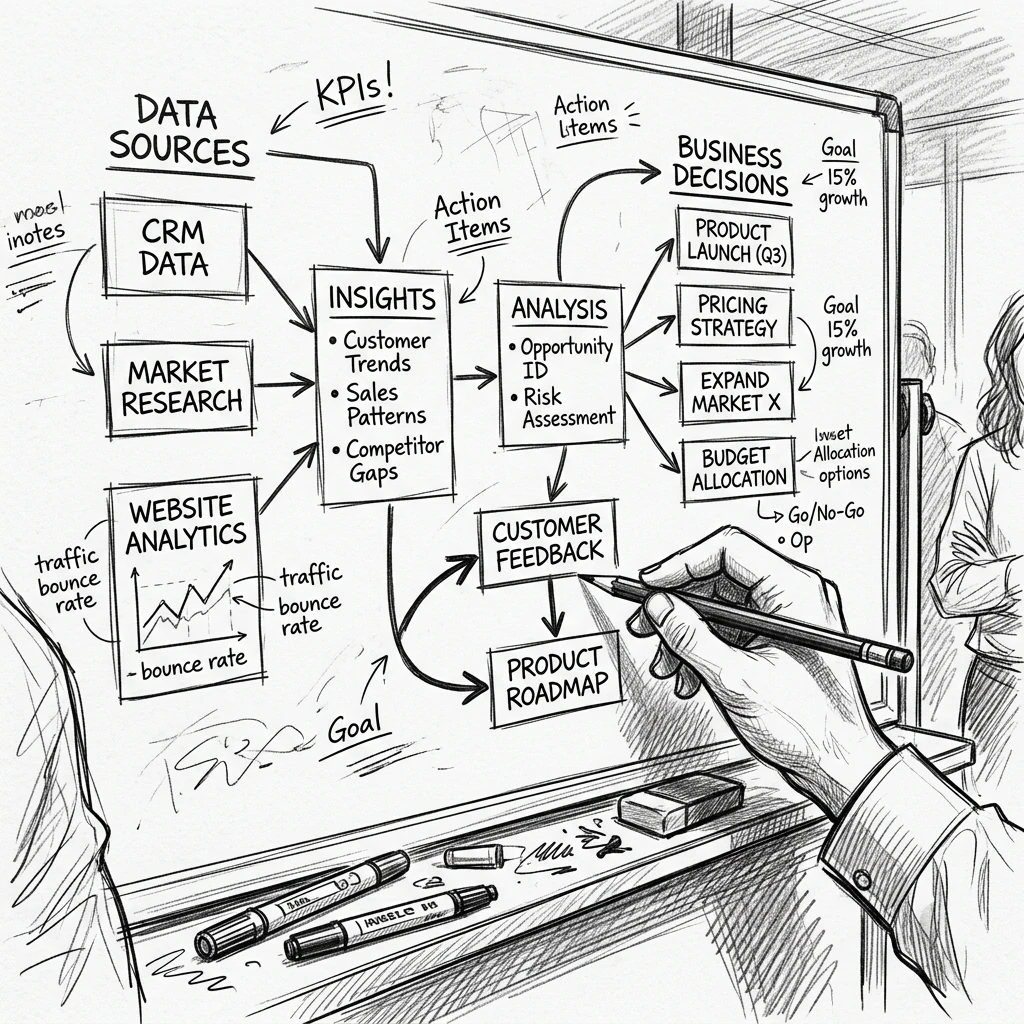
Before you talk to a single vendor, spend a week documenting where your data lives. How many tools generate financial data? Where does your sales pipeline information sit? Who touches your operational metrics, and how often?
Most businesses discover their data is scattered across 5 to 12 disconnected systems. That's normal. What matters is knowing the starting point so you can evaluate whether a BI provider can actually connect those sources. If you're still trying to find the right accounting support without overpaying, sort that foundation first. BI built on shaky financial data produces shaky intelligence.
Step 2: Define the Decisions You Need to Improve
"We want better visibility" is not a useful starting point. Get specific. Are you trying to forecast cash flow more accurately? Identify which product lines actually generate profit after overhead? Spot customer churn before it shows up in revenue?
Write down your top three to five decisions that currently rely on gut instinct or outdated reports. These become your BI requirements. Every feature, tool, and service you evaluate should map directly back to improving one of those decisions. Anything that doesn't is a distraction.
Step 3: Choose Between Platforms and Managed Services
This is where most businesses make their most expensive mistake. Self-service BI platforms (Tableau, Power BI, Looker) are powerful but demand dedicated analysts to configure and maintain them. If you don't have that person on staff, you'll buy a tool that collects dust within 90 days.
Managed BI services, on the other hand, pair the technology with human expertise. Someone builds your dashboards, maintains your data pipelines, and flags anomalies before they become crises. The trade-off is cost: managed services run higher than platform licenses alone. But for businesses generating real revenue without a full analytics team, managed services almost always deliver better ROI.
There's an honest caveat here. If your annual revenue sits below $1M, full-scale BI services might be premature. A well-structured profit and loss statement combined with a solid cash flow model might serve you better until you outgrow those tools.

Step 4: Evaluate Providers on Outcomes, Not Features
Every BI vendor will show you a dazzling demo. Ignore the sizzle. Instead, ask three questions that reveal whether they can actually deliver for your business:
What does onboarding look like, and how long until we see usable outputs? Anything over 90 days for a small to midsize business is a red flag.
How do you handle data quality issues? The honest answer is "we help you fix them." The dishonest answer is "our platform handles that automatically."
Can you show results from a business similar to ours in size and complexity? Generic enterprise case studies mean nothing if you're a 30-person operation.
Skip providers who lead with technology buzzwords and can't explain outcomes in plain language. The best BI partners talk about your business first and their platform second.
Step 5: Start Narrow, Then Expand
Resist the urge to boil the ocean. Pick one high-impact area (usually financial reporting or sales pipeline visibility) and get that working well before expanding scope. A focused rollout builds internal confidence and gives you a concrete win to justify further investment.
This is also where thirteen-week cash flow forecasting proves its value as a BI starting point. It's specific enough to produce fast results and broad enough to surface data quality issues you'll need to fix before tackling more complex analytics.
Integrating AI Into Your Business Intelligence Strategy
AI has shifted from "nice to have" to "practical advantage" in BI, but only when applied thoughtfully. For owner-operated businesses, the real opportunity isn't in building custom machine learning models. It's in using AI to automate the tedious parts of data analysis that would otherwise require expensive human hours.
Where AI Adds Genuine Value
Anomaly detection is the clearest win. AI can monitor hundreds of data points simultaneously and flag when something deviates from normal patterns. Your margins suddenly dropped 3% last Tuesday? An AI-powered BI system catches that before your month-end close, not after.
Natural language querying is another practical application. Instead of learning how to build custom reports, you type "show me revenue by product line for Q3 compared to last year" and get an answer. This alone can justify the cost for businesses where the owner is the primary decision-maker and doesn't have time to learn complex reporting tools. Many companies exploring AI in back-office operations find that starting with BI use cases delivers the fastest, most tangible returns.
Where AI Falls Short
AI won't replace strategic interpretation. It can tell you what happened and sometimes predict what might happen. It cannot tell you why it matters or what you should do about it in the context of your specific business. That requires human judgment, preferably from someone who understands both the data and your operations.
Be especially skeptical of "AI-powered insights" that amount to restating obvious trends in fancier language. If your BI tool's big AI insight is "revenue is higher in Q4 than Q1," you're paying for a calendar, not intelligence.
Common BI Implementation Pitfalls to Avoid
Even well-chosen business intelligence services fail when implementation goes sideways. Three patterns account for the majority of BI project failures.
Skipping the governance conversation. Nobody wants to talk about data ownership and naming conventions. But when your marketing team calls a metric "MQLs" and your sales team calls the same metric "qualified leads" with a different definition, your dashboards become meaningless. Nail down definitions before you build anything.
Over-customizing from day one. Custom dashboards are addictive. Suddenly everyone wants their own view, their own metrics, their own filters. Standardize first. Customize later, and only for people who've demonstrated they'll actually use the custom views.
Treating BI as a one-time project. Your business changes. Your data sources change. Market conditions change. BI services need ongoing maintenance and periodic recalibration. Budget for it upfront, or accept that your dashboards will be outdated within six months.
Walden approaches this challenge by combining financial advisory with operational system frameworks that keep intelligence aligned with how businesses actually run. For companies that need strategic financial insights but aren't ready for a full-time CFO, this kind of integrated approach often outperforms standalone BI tools.
Frequently Asked Questions
How much should a small to midsize business budget for BI services each month?
Budgeting depends on data complexity, number of sources, and how much hands-on support you need. Many businesses start with a modest monthly retainer for core reporting and data upkeep, then increase investment as adoption and scope expand.
Who should own BI internally if we do not have a data team?
Assign an executive sponsor for priorities and a day-to-day owner who can validate definitions and approve changes, often operations or finance. The BI partner can handle technical work, but an internal owner is essential for decisions, alignment, and accountability.
What KPIs should we start with if we are unsure what to measure?
Start with a small set tied to controllable levers, such as revenue drivers, gross margin, fulfillment or delivery performance, and customer retention indicators. Choose metrics that influence weekly decisions, not vanity metrics that only look good in reports.
How do we ensure data security and access control in BI tools?
Use role-based access so teams only see what they need, and separate sensitive financial and HR data from broader reporting views. Ask providers about encryption, audit logs, and how they manage credentials, especially when connecting multiple systems.
What does a good BI onboarding process look like for a busy owner-operator?
A strong onboarding plan minimizes meetings, clarifies goals upfront, and uses short review cycles with clear deliverables. You should see quick prototypes, a defined timeline, and a simple feedback loop so improvements happen without dragging on.
How can BI support marketing and sales alignment without creating reporting arguments?
Create a shared funnel taxonomy and a single source of truth for lead and pipeline stages before building performance views. When both teams agree on definitions and attribution rules, BI becomes a collaboration tool instead of a debate trigger.
How do we measure whether BI is delivering ROI beyond nicer dashboards?
Track decision cycle time, error reduction, and performance improvements tied to specific initiatives, such as fewer pricing mistakes or faster course-corrections in spend. The clearest ROI shows up when teams act sooner and with more confidence, not when charts look better.
Turning Data Into Decisions That Matter
The right business intelligence services don't just give you prettier charts. They compress the time between "something changed" and "here's what we're doing about it." That speed advantage compounds over months and years into meaningfully better business outcomes.
Start with your most painful data gap. Choose a provider who speaks your language, not just their own. Build governance before dashboards. And remember that the goal was never the data itself. The goal was always better decisions.
If you're running a growing business and want financial intelligence without the overhead of building an in-house analytics team, Walden brings together financial leadership, operational systems, and AI infrastructure tailored for owner-operated companies. Reach out to see how BI services fit into your growth plan.